
Overview
Peach and nectarine have increased in importance since the nineties, as orchards were renovated and new varieties were introduced, including white and yellow pulp fruits from both peach and nectarine. Due to the difference in altitude between the different areas of production, fruits are widely available from May-October.
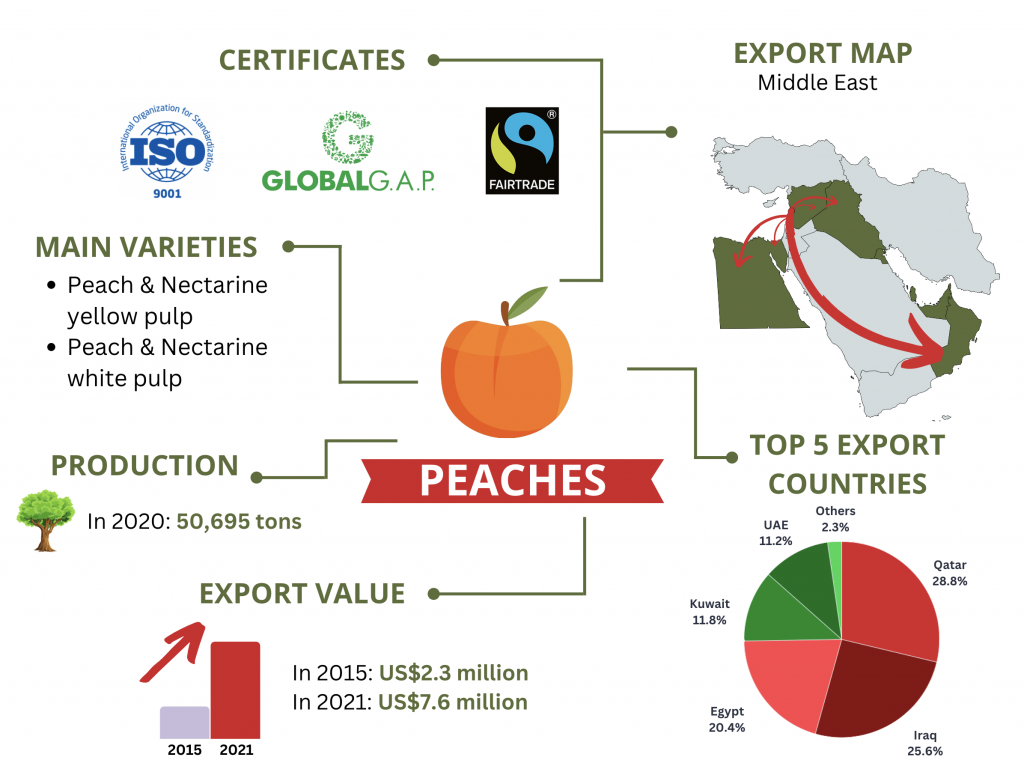
At the moment there are 3 peach farms GlobalGAP certified.
Varieties
The main varieties that are grown in Lebanon are peach and nectarine yellow pulp and peach and nectarine white pulp.
Production
The area under peaches and nectarines went down by some 15% between 2015 and 2020 to some 3,318 ha, while production decreased by some 2% to 50,695 tons in 2020.*
Export
Exports of peaches and nectarines more than tripled over the last 7 years. The export value climbed from USD 2.3 mn in 2015 to USD 7.6 mn in 2021. The growth accelerated over the last few years and is expected to continue.**
Destinations
The main destination markets for Lebanese potatoes are Qatar, Iraq, Egypt, Kuwait and UAE.
Availability
Lebanese peaches and nectarines are available from May to October. As such the season is completely opposite to that of South Africa, an important supplier of these kinds of stone fruits, and a bit longer than that of Spain, Jordan, and Tunisia.

* Production data from the Food and Agriculture Organization of the United Nations, 2022
** Trade data from Trade Map – International Trade Centre, 2022