
Overview
Since the 1960s, Lebanon has been an important regional producer of potatoes using quality seeds from western countries, such as the Netherlands, exporting to markets mainly in Arab countries. Akkar and Bekaa are the major production areas. The different climatic zones in Lebanon ensure diversity in harvesting periods and year-round availability.
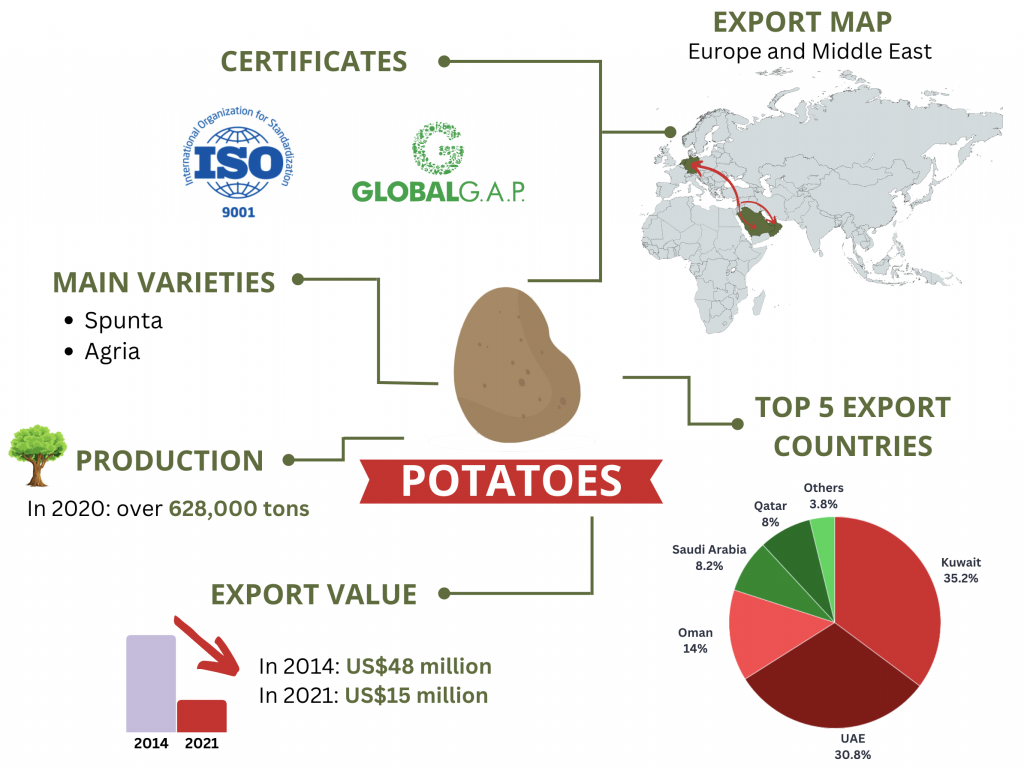
At the moment there are 8 potato farms GlobalGAP certified.
Varieties
The main potato varieties produced in Lebanon are Spunta and Agria.
Production
The area under potatoes increased by more than 10% between 2015 and 2020 to some 23,000 ha, while production increased by 20% to over 628,000 tons in 2020.*
Export
Exports of potatoes reached an all-time high of USD 48 million in 2014. For the past 3 years, the average value hovers around USD 15 million but growth is expected to pick up with key markets showing growing imports of Lebanese potatoes.**
Destinations
The main destination markets for Lebanese potatoes are Kuwait, UAE, Oman, Saudi Arabia, and Qatar. As of recent, Lebanese potatoes also found their way to European markets like Germany and The Netherlands.
Availability
Lebanese potatoes are available all year, which gives the country a competitive edge over other countries like Israel, Egypt and Morocco, that only have availability in the first half of the year.

* Production data from the Food and Agriculture Organization of the United Nations, 2022
** Trade data from Trade Map – International Trade Centre, 2022